HEMATOLOGY101.Com

* Blood Research, Blood Diseases

* Anemia, Lukemia, Bone Marrow

* Hematology Symptoms, Research

* Hematology News, Info, Resources

Filter= Hematology


  Exact Time


 * Search on anything here:         Like us:      Follow us:   


 * Featured New Sites! =>


* Z101.COM *


** Useful Links **
  • Obituaries101
  • Accident Lawyers101
  • FIRE101
  •  FIRE101 MOBILE
  • POLICE101
  • Protect101
  • School Directions
  •  

  • ** Car Websites **
  •   Corvettes 101
  •   Mustangs 101
  • New Cars 101
  • Luxury Cars 101
  • Exotic Cars 101
  •  

  • ** Sports Websites **
  • Lacrosse 101
  • Volleyball 101
  • Cross Country 101
  • Rowing 101
  • Rugby 101
  • Softball 101
  • Water Polo 101
  • Karate 101
  • TKD 101
  •  

  • ** Medical Websites **
  • Internal Medicine 101
  • Sports Medicine 101
  • Nursing 101
  • OccupationalTherapy101
  • Orthopedics 101
  • Podiatry 101
  • Psychiatry 101
  •  

  • Diseases 101
  • Depression 101
  • Lyme Disease 101
  • OCD101
  •  

  • ** Lawyers Websites **
  • * Find Lawyers 101 *
  • Accident Lawyers 101
  • Defense Lawyers 101
  • Divorce Lawyers 101
  • DWI Lawyers 101
  • Malpractice Lawyers 101
  • Personal Injury Lawyers 101
  • Real Estate Lawyers 101
  • Tax Lawyers 101
  •  


    * Hematology101 SEARCH *

       *Filter: "Hematology"


    Hematology | Blood Cells, Disorders & Tests | Britannica
    Hematology, branch of medical science concerned with the nature, function, and diseases of the blood. In the 17th century, Dutch microscopist Antonie van Leeuwenhoek, using a primitive, single-lens microscope, observed red blood cells (erythrocytes) and compared their size with that of a grain of

    Blood | Definition, Composition, Functions, & Facts | Britannica
    Blood is a fluid that transports oxygen and nutrients to cells and carries away carbon dioxide and other waste products. It contains specialized cells that serve particular functions. These cells are suspended in a liquid matrix known as plasma.

    Hematocrit | Red Blood Cells, Plasma & Hemoglobin | Britannica
    hematocrit, diagnostic procedure for the analysis of blood. The name is also used for the apparatus in which this procedure is performed and for the results of the analysis. In the procedure, an anticoagulant is added to a blood sample held in a calibrated tube. The tube is allowed to stand for one hour, after which the sedimentation rate (how rapidly blood cells settle out from plasma) is ...

    Blood - Erythropoiesis, Hemoglobin, Oxygen | Britannica
    Blood - Erythropoiesis, Hemoglobin, Oxygen: Red cells are produced continuously in the marrow of certain bones. As stated above, in adults the principal sites of red cell production, called erythropoiesis, are the marrow spaces of the vertebrae, ribs, breastbone, and pelvis. Within the bone marrow the red cell is derived from a primitive precursor, or erythroblast, a nucleated cell in which ...

    Blood - Oxygen Transport, Hemoglobin, Erythrocytes | Britannica
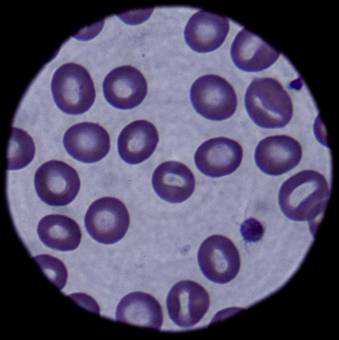
    Blood - Oxygen Transport, Hemoglobin, Erythrocytes: The red blood cells are highly specialized, well adapted for their primary function of transporting oxygen from the lungs to all of the body tissues. Red cells are approximately 7.8 μm (1 μm = 0.000039 inch) in diameter and have the form of biconcave disks, a shape that provides a large surface-to-volume ratio. When fresh blood is examined ...

    Blood - Leukocytes, Immunity, Defense | Britannica
    Blood - Leukocytes, Immunity, Defense: White blood cells (leukocytes), unlike red cells, are nucleated and independently motile. Highly differentiated for their specialized functions, they do not undergo cell division (mitosis) in the bloodstream, but some retain the capability of mitosis. As a group they are involved in the body’s defense mechanisms and reparative activity. The number of ...

    Blood - Components, Tests, Analysis | Britannica
    Blood - Components, Tests, Analysis: Physicians rely upon laboratory analysis to obtain measurements of many constituents of the blood, information useful or necessary for the detection and recognition of disease. Hemoglobin contains a highly colored pigment that interferes with the passage of a beam of light. To measure hemoglobin concentration, blood is diluted and the red blood cells ...

    Blood disease - Vascular, Bleeding, Disorders | Britannica
    Blood disease - Vascular, Bleeding, Disorders: Vascular defects causing abnormal bleeding are rare. In cases of vitamin C deficiency (scurvy), capillary integrity is lost, and blood seeps into the tissues. In the inherited condition hemorrhagic telangiectasia, groups of enormously dilated capillaries can be seen in the skin and mucous membranes of the mouth, nose, and gastrointestinal and ...

    Blood - Platelets, Thrombocytes, Clotting | Britannica
    Blood - Platelets, Thrombocytes, Clotting: The blood platelets are the smallest cells of the blood, averaging about 2 to 4 μm in diameter. Although much more numerous (150,000 to 400,000 per cubic mm) than the white cells, they occupy a much smaller fraction of the volume of the blood because of their relatively minute size. Like the red cells, they lack a nucleus and are incapable of cell ...

    Blood - Immunity, Antibodies, Plasma | Britannica
    Blood - Immunity, Antibodies, Plasma: Cells of the blood and constituents of the plasma interact in complex ways to confer immunity to infectious agents, to resist or destroy invading organisms, to produce the inflammatory response, and to destroy and remove foreign materials and dead cells. The white blood cells (leukocytes) have a primary role in these reactions. Granulocytes and monocytes ...


           * Hematology101 LATEST NEWS *

               *Filter: "Hematology"


  •  NEW JOBS
  • Obituaries101
  • FIRE101
  • POLICE101
  • PROTECT101
  • School Directions
  • * POPULAR:  
  • Democrats101
  • Republicans101
  • NewCars101
  • LuxuryCars101
  • CarbonCapture101
  • *Sponsored: *Teleflora Flowers GREAT Deals!


    *Click a bouquet and send it today:


        ~~> 30% Off Discount Page - ALL FLOWERS! <~~


    *More Savings: 
    Get well: 20%    Sympathy & Funeral: 20%


             Birthday: $15    New Baby 15% off    Anniversary 15% off
    Hematology Symptoms
    • Fatigue and Weakness: Persistent lack of energy caused by anemia, where reduced red blood cell levels limit oxygen delivery to body tissues.
    • Unexplained Bruising and Petechiae: Easy bruising or pinpoint red spots on the skin resulting from low platelet counts or impaired blood clotting mechanisms.
    • Frequent or Recurrent Infections: Increased susceptibility to illness due to leukopenia or dysfunctional white blood cells failing to protect against pathogens.
    • Swollen Lymph Nodes: Painless enlargement of lymph glands in the neck, armpits, or groin often associated with hematologic malignancies like lymphoma or leukemia.
    • Unexplained Fever and Night Sweats: Systemic symptoms frequently tied to active hematologic disorders or hypermetabolic states driven by bone marrow dysfunction.
    • Shortness of Breath and Palpitations: Respiratory distress or rapid heart rate during light activity as the cardiovascular system attempts to compensate for severe anemia.
    • Bone or Joint Pain: Deep, aching discomfort caused by the expansion of abnormal blood cells within the bone marrow space.


    * Useful Government Health Sites:                               
    Hematology History
    • 1658: Discovery of Red Blood Cells Jan Swammerdam becomes the first person to observe red blood cells under a microscope in frog blood, followed closely by Antonie van Leeuwenhoek in human blood.
    • 1901: Discovery of ABO Blood Groups Karl Landsteiner identifies the A, B, and O blood groups, laying the scientific foundation for safe blood transfusions and earning the Nobel Prize.
    • 1910: First Description of Sickle Cell Anemia James B. Herrick publishes the first detailed medical account of elongated, sickle-shaped red blood cells in a dental student from Grenada.
    • 1940: Identification of the Rh Factor Karl Landsteiner and Alexander Wiener discover the Rh factor, drastically reducing fatal transfusion reactions and resolving hemolytic disease of the newborn.
    • 1948: First Remission of Childhood Leukemia Sidney Farber demonstrates that aminopterin (a folic acid antagonist) can achieve temporary remissions in acute lymphoblastic leukemia, marking the birth of modern cancer chemotherapy.
    • 1957: First Successful Human Bone Marrow Transplant E. Donnall Thomas performs the first successful intravenous infusion of bone marrow stem cells into leukemia patients treated with radiation therapy.
    • 1960: Discovery of the Philadelphia Chromosome Peter Nowell and David Hungerford identify a specific chromosomal abnormality in chronic myeloid leukemia, establishing the genetic basis of cancer.
    Current Hematology Research
    • Gene Therapy for Sickle Cell Disease: Advances in CRISPR-based gene editing are enabling targeted modifications in patient hematopoietic stem cells to restore healthy hemoglobin production.
    • CAR-T Cell Innovations in Hematologic Malignancies: Next-generation chimeric antigen receptor T-cell therapies are expanding target antigens to overcome resistance mechanisms in relapsed leukemia and lymphoma.
    • Minimal Residual Disease (MRD) Tracking: High-throughput sequencing and digital PCR techniques are improving early detection of residual cancer cells to guide personalized treatment timelines.
    • Bispecific Antibodies in Multiple Myeloma: Dual-targeting immunotherapies are showing high response rates by simultaneously binding to tumor antigens and cytotoxic T cells to induce targeted lysis.
    • Novel Factor VIII Mimetic Agents for Hemophilia: Long-acting subcutaneous non-factor replacement therapies continue to lower bleeding rates and reduce the burden of frequent intravenous infusions.
    • JAK Inhibitors in Myelofibrosis: Targeted kinase inhibition therapies are demonstrating significant efficacy in reducing splenomegaly and improving constitutional symptoms in chronic myeloproliferative neoplasms.
    • Complement System Targeted Therapies in PNH: Next-generation C3 and C5 complement inhibitors offer improved control over extravascular hemolysis in paroxysmal nocturnal hemoglobinuria.

    HEMATOLOGY101.COM --- Hematology Information, News, and Resources, Lots More

    Need to Find information on any subject? ASK THE HEMATOLOGY101 GURU!

     * Contact us:  support@z101.com


    Copyright 2010-2026  HEMATOLOGY101.COM